

Table of Contents
- Why Anxiety Doesn’t Always Respond to Logic
- The Core Benefits of Spiritual Counseling for Anxiety
- Spiritual Counseling vs Therapy: What’s the Difference?
- A Spiritual Counseling Session: What to Expect
- How to Manage Anxious Thoughts Between Sessions
- Nonreligious Spiritual Counseling for Skeptical Minds
- Is Spiritual Counseling Right for You?
- Frequently Asked Questions
Last Updated: October 20, 2026
Why Anxiety Doesn’t Always Respond to Logic
Anxiety is a threat response, not a reasoning problem, which is why explaining your worries away rarely quiets them. You can know, intellectually, that the email is fine and the relationship is stable, and still feel your chest tighten at 2 a.m. That gap between what you know and what you feel is where the benefits of spiritual counseling for anxiety begin.
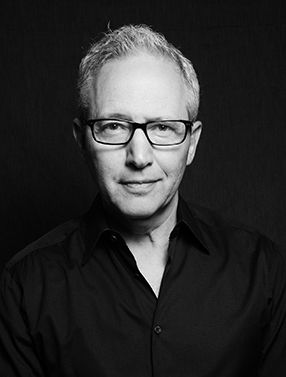
I’m Dr. Geoffrey Rose, a spiritual counselor practicing on the Hollywood-West Hollywood border in Los Angeles. Most of the people I sit with are intelligent, creative, and already well-versed in self-analysis. They’ve read the books. They’ve done the therapy. And they still arrive with the same complaint: I understand why I’m anxious. So why am I still anxious?
Because insight lives in the mind, and anxiety lives in the body and the imagination. The two don’t automatically sync.
The American Psychological Association’s overview of anxiety describes anxiety as a future-oriented mood state, which is the clinical way of saying it’s built from thoughts about what hasn’t happened yet. You cannot out-argue a future that hasn’t arrived. You can only change your relationship to the thoughts producing it.
That’s the work we do here. Below, I’ll walk through what spiritual counseling actually offers for anxiety, how it differs from therapy, and how to tell whether it’s right for you.
The Core Benefits of Spiritual Counseling for Anxiety
Spiritual counseling for anxiety helps you relate to anxious thoughts differently rather than trying to delete them. The relief comes from a shift in identity, not from winning an argument with your own mind.
Separating Your True Self from Anxious Thoughts
Most people experience anxiety as a verdict: I am an anxious person. Spiritual counseling separates the observer from the observed. You are the one noticing the thought, which means you are not the thought.
This is the heart of what I call the Emotional Detoxx. We work through the conditioned beliefs underneath the worry until they lose their grip. A common mistake is treating every anxious thought as information to be acted on. In practice, most of them are echoes of old conditioning, not signals about the present.
Moving Beyond Symptom Management
Managing symptoms is valuable, and it’s where most approaches stop. You learn breathing techniques, you reframe the thought, you get through the meeting. Then the same wave returns next week.
Spiritual counseling asks a different question: what is the anxiety protecting? Often it guards an identity built on control, achievement, or being needed. When that identity loosens, the anxiety has less to defend. This is the territory of self-transcendence, the step above self-actualization that Maslow added late in his career and that Viktor Frankl identified as the root of fulfillment.
Spiritual Counseling vs Therapy: What’s the Difference?
Therapy generally treats anxiety as a condition to be assessed and managed, while spiritual counseling treats it as a signal from a self that’s outgrown its old structure. Both are legitimate. They aim at different targets.
Therapy, especially cognitive behavioral work, is excellent at identifying distorted thought patterns and building coping skills. I recommend it often. What it typically doesn’t address is the existential layer: the sense that your life doesn’t fit, that you’re performing a self you’ve outgrown, that something in you is asking for more.
Spiritual counseling picks up there. We look at the beliefs you absorbed early, the roles you took on to stay safe, and the gap between who you are and who you’ve been pretending to be. For creative and sensitive people, that gap is frequently the engine of the anxiety.
|
Dimension |
Therapy |
Spiritual Counseling |
|---|---|---|
|
Primary focus |
Symptom relief, coping skills |
Identity, meaning, conditioning |
|
Typical method |
Assessment, cognitive reframing |
Inquiry into beliefs and self-image |
|
Best for |
Acute symptoms, diagnosable conditions |
Existential stuckness, post-therapy growth |
|
Typical length |
Weeks to months |
Varies by client and goal |
A Spiritual Counseling Session: What to Expect
A first session is a conversation, not an intake form. We sit down, you talk about what brought you in, and I listen for the belief underneath the story rather than the story itself.

Sessions run in person in Los Angeles or by phone and video for clients elsewhere. There’s no script and no diagnosis. I’ll ask questions, you’ll notice things, and we’ll follow what has energy. People are often surprised by how quickly something shifts when they’re given room to say the true thing out loud.
I offer a free introductory consultation so you can get a feel for the work before committing. You can reach out through my contact page to schedule one.
How to Manage Anxious Thoughts Between Sessions
Between sessions, the goal is not to suppress anxious thoughts but to stop treating them as commands. The practical skill is simple: notice the thought, name it as a thought, and return to what you were doing.
Here’s the sequence I give clients:
- Notice the physical signal first (tight chest, shallow breath, jaw tension)
- Name it plainly: “This is anxiety, not a fact”
- Ask: “What is this thought protecting?”
- Write the thought down instead of solving it in your head
- Return to one concrete action in front of you
The writing step matters more than people expect. Anxious thoughts loop because they stay abstract. On paper, they lose their authority. What most guides miss is that you’re not trying to feel calm. You’re trying to stop obeying the thought.
Nonreligious Spiritual Counseling for Skeptical Minds
Nonreligious spiritual counseling works entirely without doctrine, scripture, or belief requirements. If you’re skeptical, that skepticism is welcome here. It’s usually a sign of a sharp mind, not a closed one.
I don’t ask anyone to believe anything. The work is experiential: you look directly at your own thoughts and feelings and see what’s actually there. The Pew Research Center’s data on religiously unaffiliated Americans shows a growing share of people who want depth without dogma, and that’s exactly who this approach serves.
The word spiritual trips people up. Here it simply means the part of you that’s larger than your conditioning. You don’t need a faith tradition to investigate that. You need curiosity and a willingness to tell the truth about your own experience.
Is Spiritual Counseling Right for You?
Spiritual counseling is a good fit if you’ve done therapy, understand your patterns, and still feel stuck in the same anxious loop. It suits people who want to grow rather than simply cope.
It’s less suited to acute crisis or untreated clinical conditions, where a licensed therapist or physician should be your first call. I’m a spiritual counselor with a Ph.D., not a medical provider, and I’ll say so plainly if another resource fits you better.
If you’re in Los Angeles or anywhere with a phone, and you’re ready to look at the beliefs underneath the anxiety rather than manage the symptoms one more time, my individual and couples work is built for exactly this. I also offer online and phone sessions for clients who prefer to work from home.
The anxiety that survives years of insight is usually asking a bigger question than “how do I calm down.” It’s asking who you are beneath the roles and the conditioning. If that question has been nagging at you, spiritual counseling through the Emotional Detoxx approach can help you answer it. You’ll get a warm, unhurried space, an experientially-based method, and the option of in-person sessions in Los Angeles or online from wherever you are. Reach out to schedule a free introductory consultation and take the next step toward lasting change.
Frequently Asked Questions
What are the main benefits of spiritual counseling for anxiety?
The main benefits include learning to separate your true self from anxious thoughts, addressing the deeper patterns that fuel anxiety rather than just managing symptoms, and developing a sense of inner steadiness that doesn’t depend on circumstances. Many people also find they experience more ease, better relationships, and a clearer sense of purpose. It’s not about eliminating anxiety forever, but about changing your relationship to it so it stops running your life.
How is spiritual counseling different from therapy?
Therapy often focuses on diagnosing and treating specific conditions, behavioral patterns, or past trauma using clinical frameworks. Spiritual counseling, as I practice it, starts from the premise that you are not your thoughts or feelings. We work on distinguishing your true self from the anxious mind, often exploring meaning, purpose, and self-transcendence. It can complement therapy well, especially for people who have done therapy and feel ready for a different depth of inquiry.
Can spiritual counseling help if I’m not religious?
Yes. Nonreligious spiritual counseling doesn’t require any belief in God, a higher power, or organized religion. The ‘spiritual’ part refers to examining your inner life, your sense of self, and what gives your life meaning. Many of my clients are agnostic or atheist. We work with whatever framework feels authentic to you, focusing on direct experience rather than doctrine.
How do I manage anxious thoughts in the moment?
One practical approach is to notice the thought and label it: ‘This is a thought, not a fact.’ Then, instead of arguing with it or trying to suppress it, bring your attention to something physical, like the feeling of your feet on the floor or the sound of your breath. This creates a small gap between you and the thought. In our sessions, we practice this kind of disidentification so it becomes more natural over time.
Recent Comments